


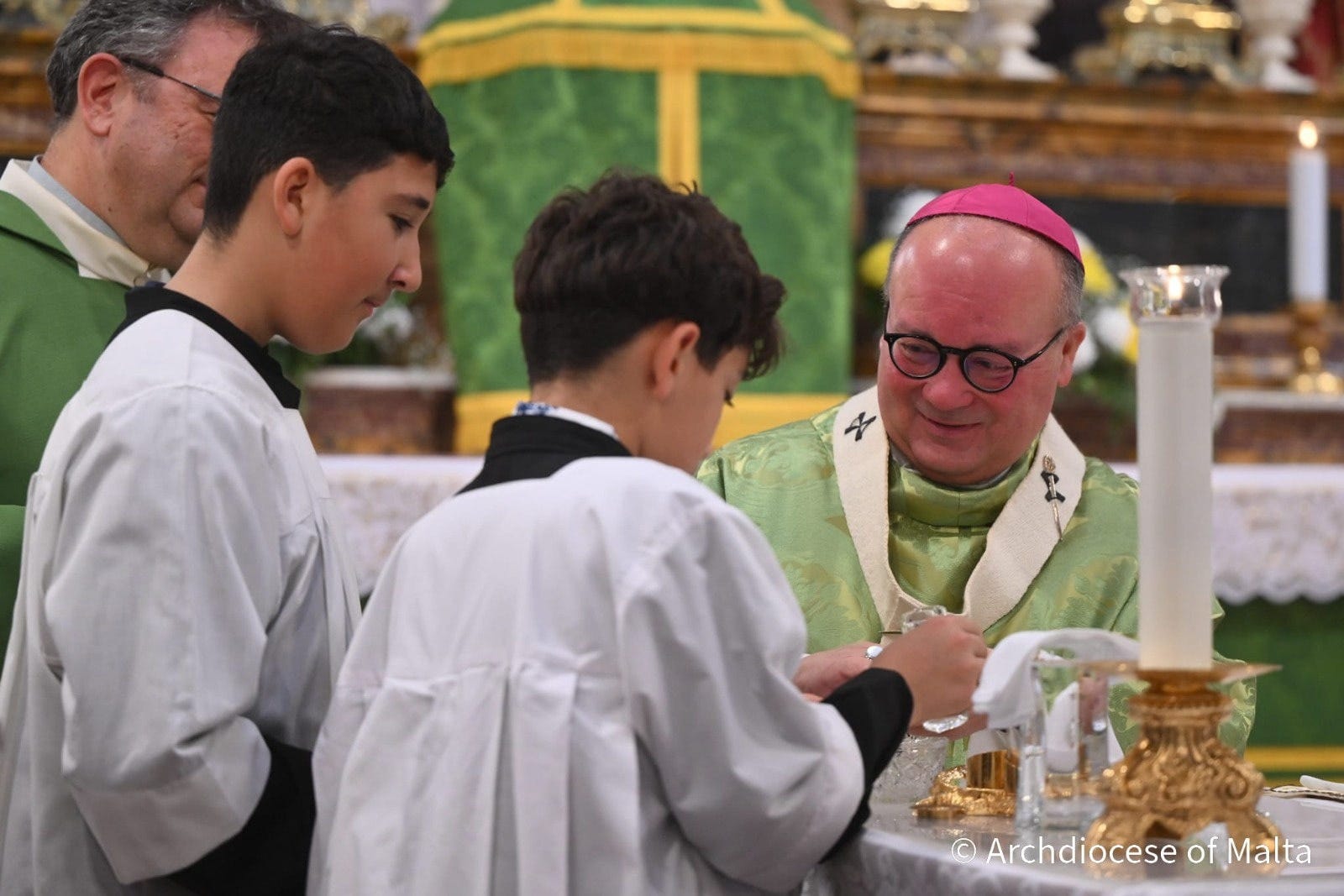
Mass for the World Day of the Poor
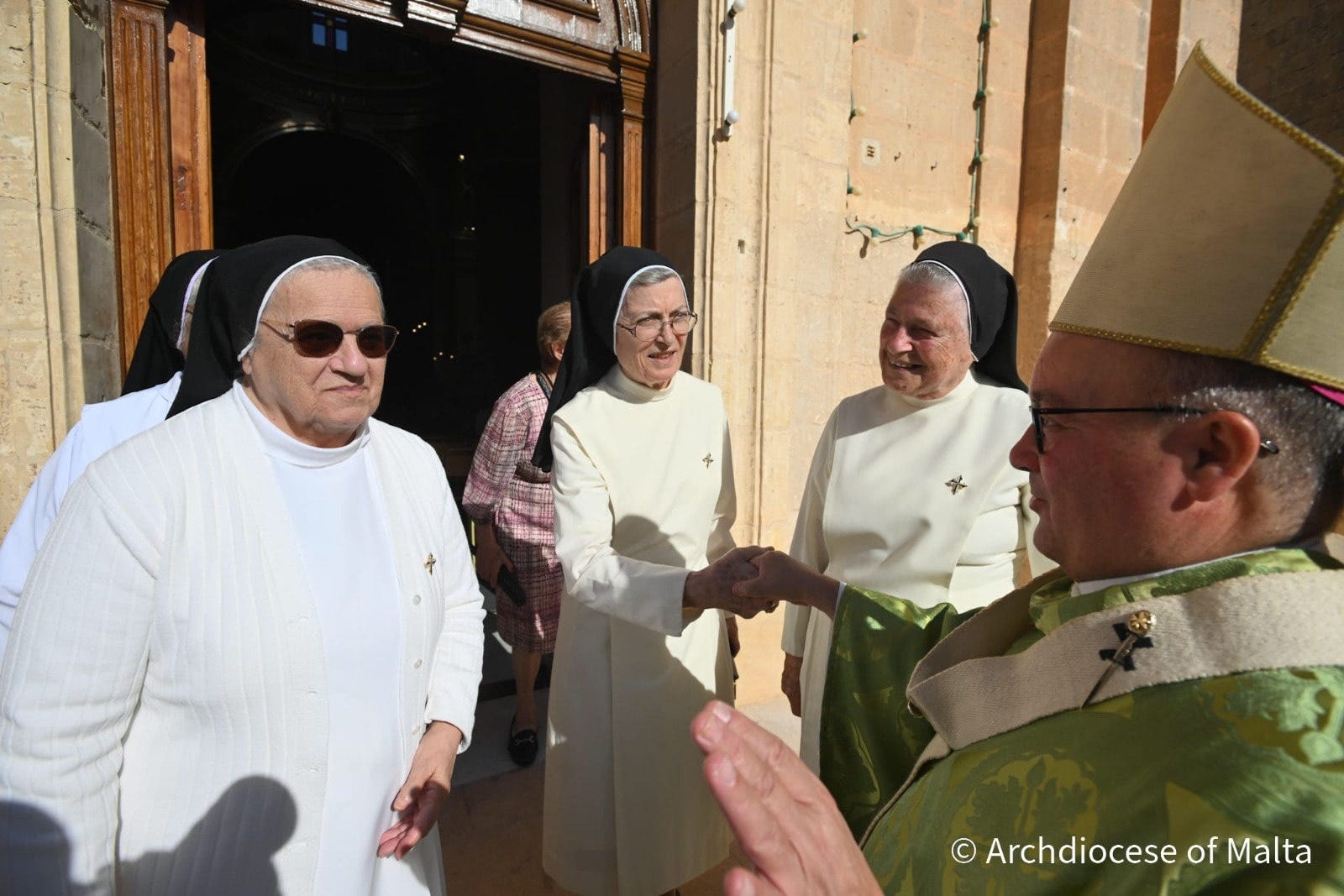
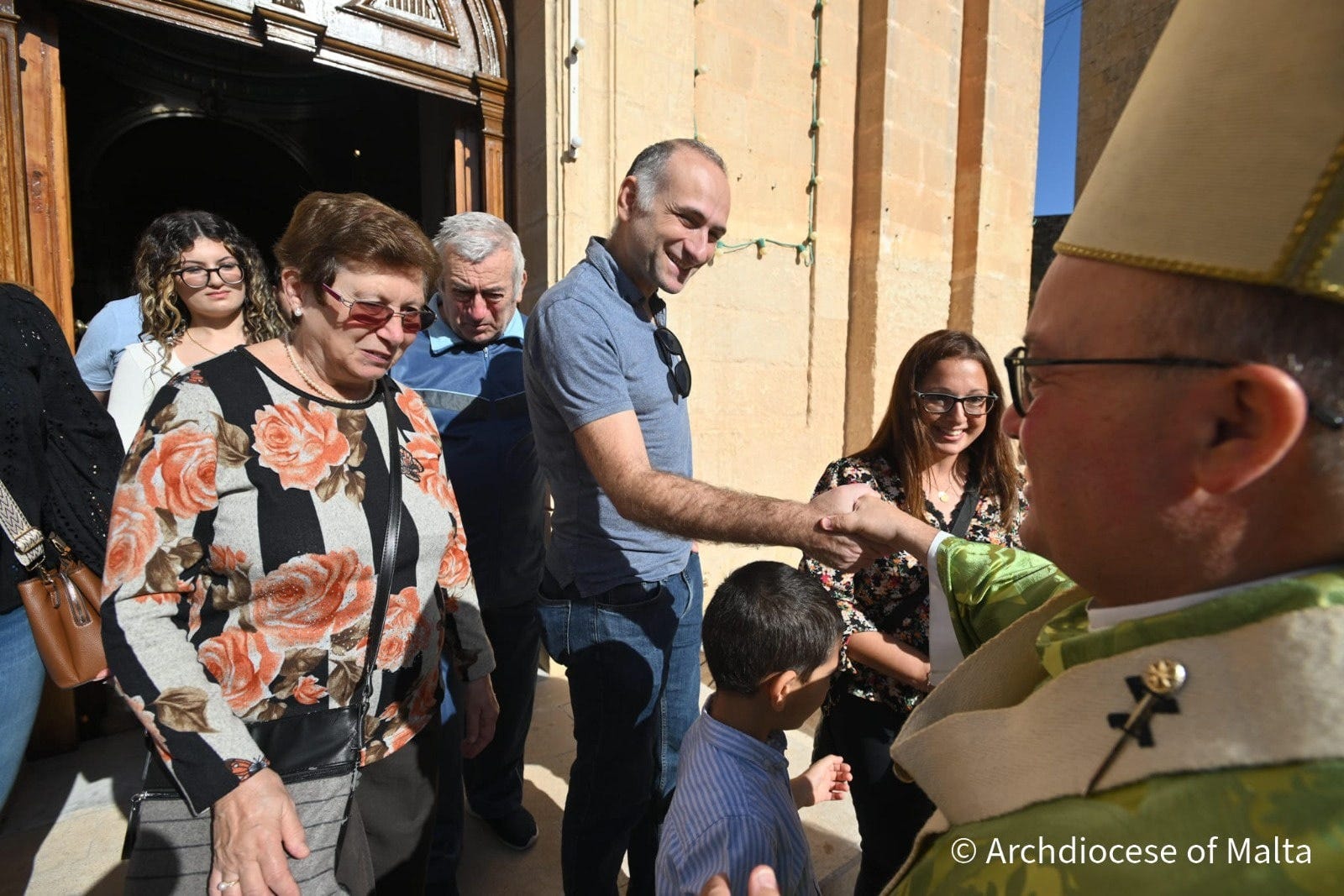
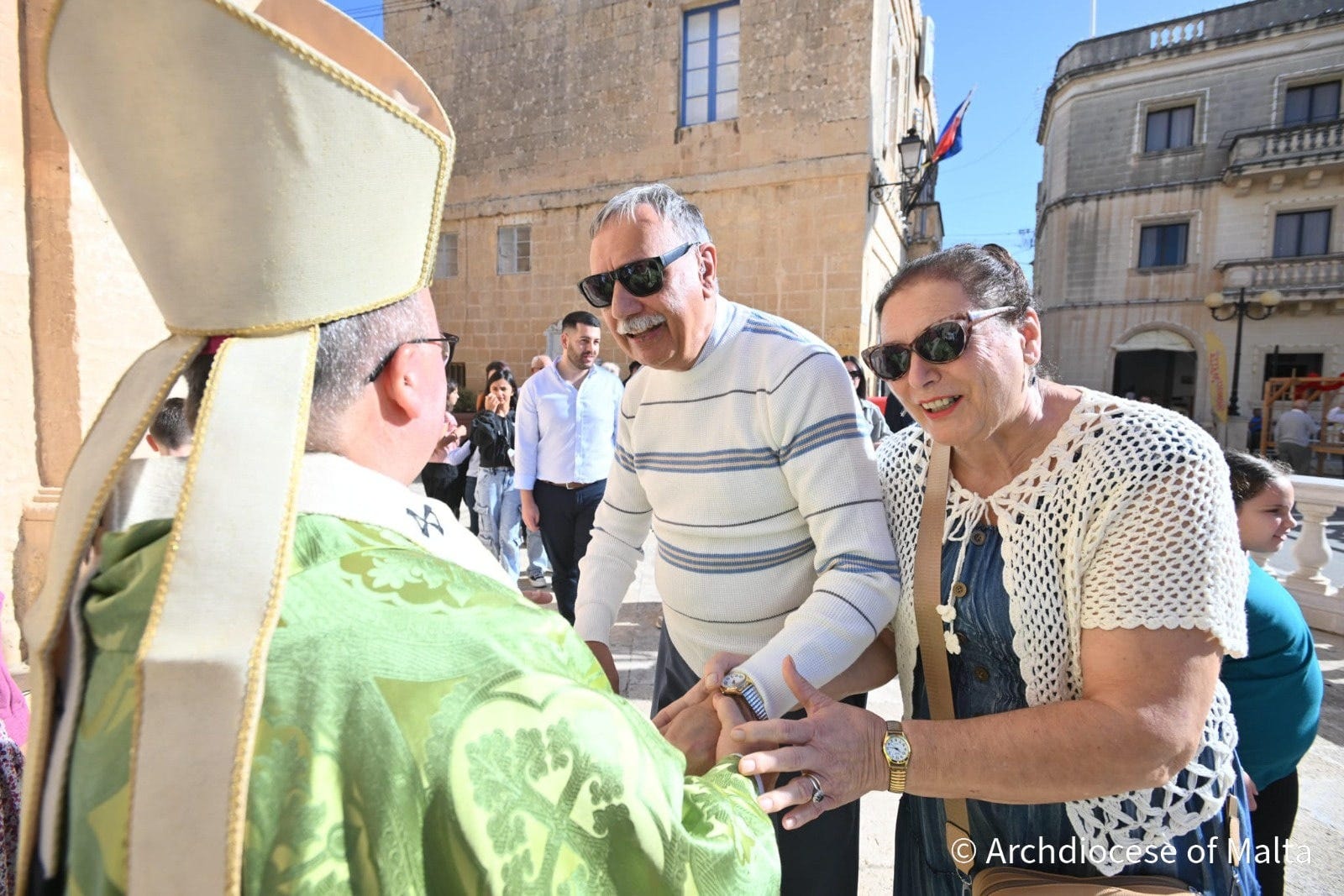
16/11/2025 – Parish Church of the Conversion of St Paul, Ħal Safi
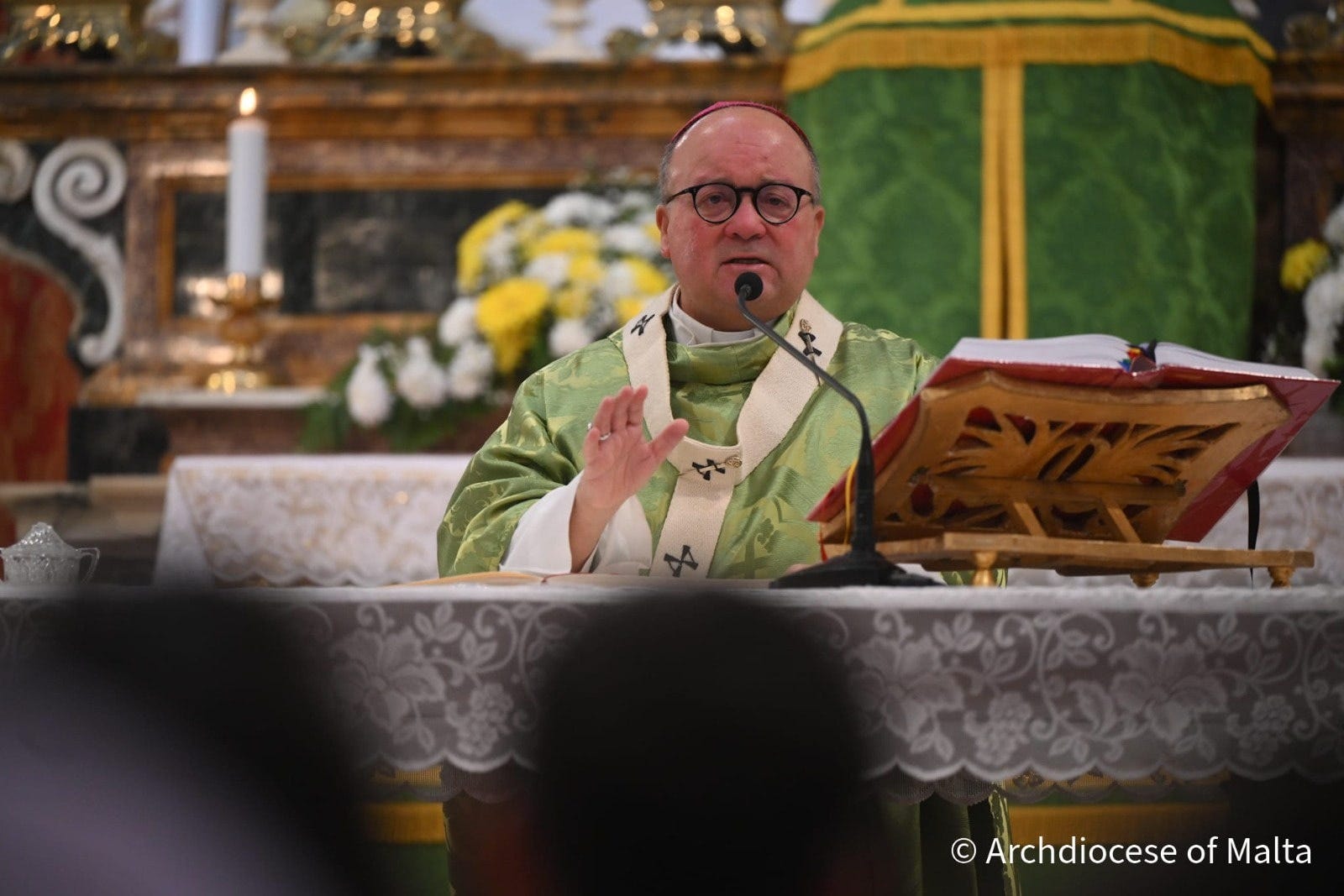
The Archbishop’s Homily
The Gospel we have just heard from Saint Luke is a tapestry of different events. Jesus speaks about historical events that had not yet taken place at the time He spoke, but which had already happened by the time Luke wrote his Gospel. At the same time, He uses them as signs of things we have not yet lived through – the end of the world or our own destiny.
Let me start with the historical events the Gospel of Luke refers to. In the year 70 AD, the Romans besieged Jerusalem and destroyed it, including the beautiful Temple, the very place where Jesus is speaking in this Gospel. Jesus says, “The time will come when not one stone will be left on another; every one of them will be thrown down” (Lk 21:6). And this is exactly what happened under Emperor Titus.
One of the great Roman monuments near the Colosseum is a triumphal arch celebrating the victory over Jerusalem and its destruction. Then there was the persecution of Christians, especially in the time of Nero, who, wanting to rebuild Rome, ordered a great fire that destroyed a large part of the city; and then blamed the Christians. A harsh persecution followed, during which Peter and Paul died.
Jesus uses the destruction of Jerusalem and the persecution of Christians to tell us: “The scene of this world—enjoy it while it lasts—but it will come to an end.” And He speaks about the end of the world, something we have not experienced yet. We are not in a hurry for the world to end. And He also warns us not to follow those who terrify us. There are some people—even wearing a collar, let me speak clearly—who love scaring people with threats about the end of the world, with Hell, with punishments. As if our God has no heart. As if the world will end tomorrow.
Jesus says: “Do not follow them” (Lk 21:8). Do not listen to them. I am warning you also, brothers and sisters, as your bishop: if there is a priest who scares you with the end of the world, with so-called “warnings” and with Hell—listen to the word of your Shepherd. And I will take care of that priest myself. Because I will not allow anyone in the name of Christ to terrorise my people. Our God is not a God of fear. It is right to revere God as God, but as Saint John tells us, love is greater than fear. And the mercy of God—as Our Lady says—is “from generation to generation” (cf. Lk 1:46–55).
But the deeper meaning of these end-of-year Gospels—because every year at this time we read passages in which Jesus speaks about the end of the world as we know it—is this: the end will come. We said we are not in a hurry. And Jesus tells us that it is not a matter of believing those who say, “It is coming now.” They will say, “It’s soon,” and then, “No, not yet.” They waste our time. Do not waste your time on such people, no matter how much they claim to have seen Our Lady or heard Jesus. Our religion is not one of terror or fear.
Jesus warns us—but He warns us so that we may learn to respect the life we are living, to live it fully, and to cherish each other. How many times, when someone dear to us dies, do we say to ourselves, “How many chances I had to tell my mother I love her, and I left it for tomorrow; or how often I could have shown respect to my father, but postponed it.” Today—today is the moment to say to those you love: “I love you. I am here for you.” Not tomorrow—today.
If Jesus wants anything from us through today’s Gospel, it is that we cherish the life He has given us. Sometimes we hear the news of a young person dying, and we say, “How sad, they never enjoyed life.” But if in every moment the Lord lends you, you can say: “This is the day I have to love, to show care, to live as a human being, to live honestly”—today, not tomorrow—then your life becomes a chain of beautiful days.
You may say, “But don’t storms ever come, Father?” Of course they do. Today feels like St Martin’s summer—beautiful sunshine, perfect for swimming—but hopefully we will get some rain too. Farmers know what I’m talking about. Everything has its time.
But how important it is that we treasure our time and remain diligent. Our Father in faith, Saint Paul, speaks clearly. You know him well, since he is your patron here. You know how much he relied on the grace of God, and at one point he said: “Anyone who is unwilling to work shall not eat” (cf. 2 Thess 3:7-12). Why? What was happening? Because Paul, especially early in his letters, was saying that the Lord is coming soon, some people started saying, “Well, if He’s coming soon, let’s just wait and do nothing. The world will end shortly.” Paul tells them: “Until the moment comes, we must work. We earn our bread through our own effort, not through laziness.”
Use your life and your time to do good
Let me end with this. Laziness, as Saint George Preca used to say, “is fertile soil for all the troubles of the world.” Do not be lazy in life. Try to use your time and your abilities to do good. And if someone thinks, “I’ll just take it easy and do nothing”—they are wasting their life. Because the responsibility the Lord has entrusted to us is to use our abilities, our talents, even the small ones, to do something good.
And so we also pray that through our effort, we may leave the world better than we found it, and live a joyful life—as we say after the consecration—“as we await Your coming in glory.” But not with our hands tied. Joyful, courageous, and diligent.
✠ Charles Jude Scicluna
Archbishop of Malta
Readings of the Mass
First Reading: Mal 3:19–20a
Psalm: 97 (98): 5–6, 7–8, 9a, 9bc
Second Reading: 2 Thess 3:7–12
Gospel: Lk 21:5–19